Feature
Last updated
See furniture in your room before you buy it
AI Room Styler can place a specific piece of furniture into a photo of your room. Upload the room and a product photo, and see that piece in your space before you buy it.
Upload the product photo and the room photo, then preview its overall form, colour, and material in your space before the delivery van is booked.
Place a product in a roomFirst 3 designs free with Google · No credit card
From $9.99 for 20 designs · No subscription
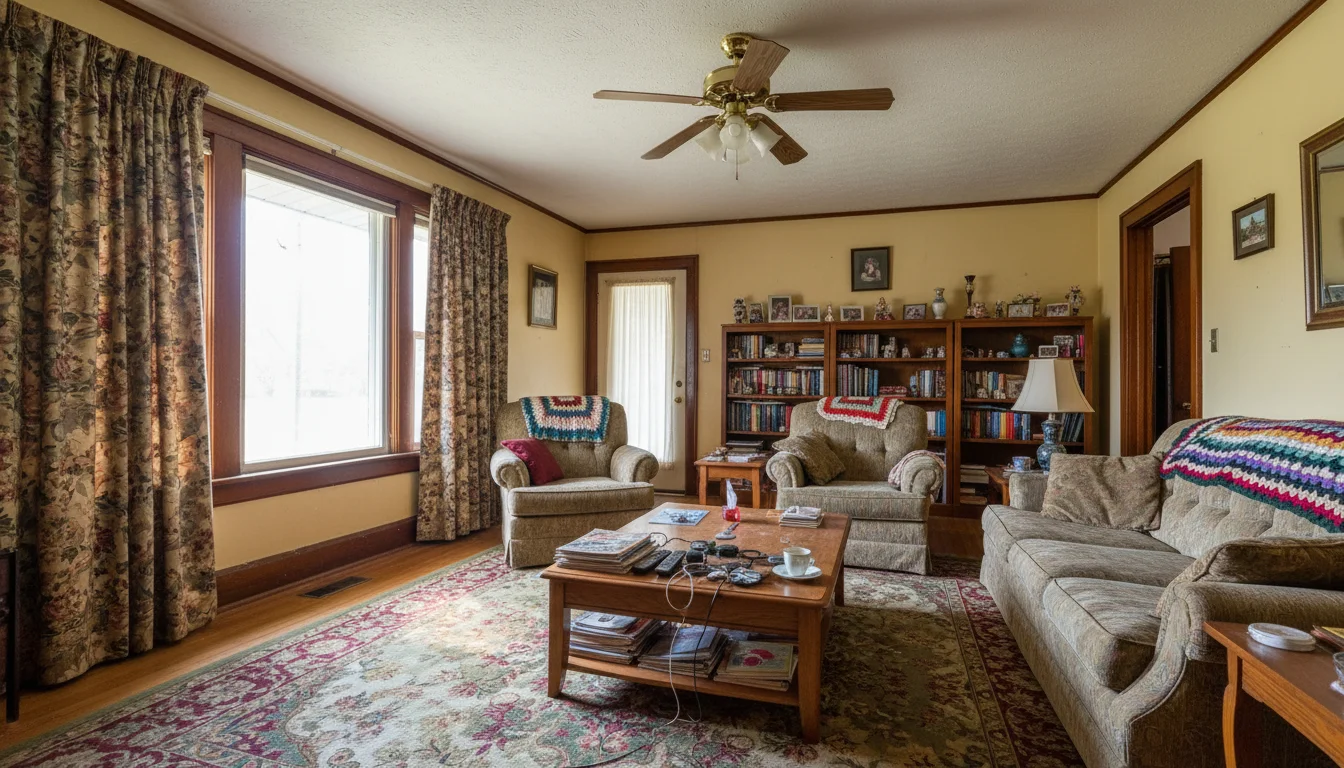
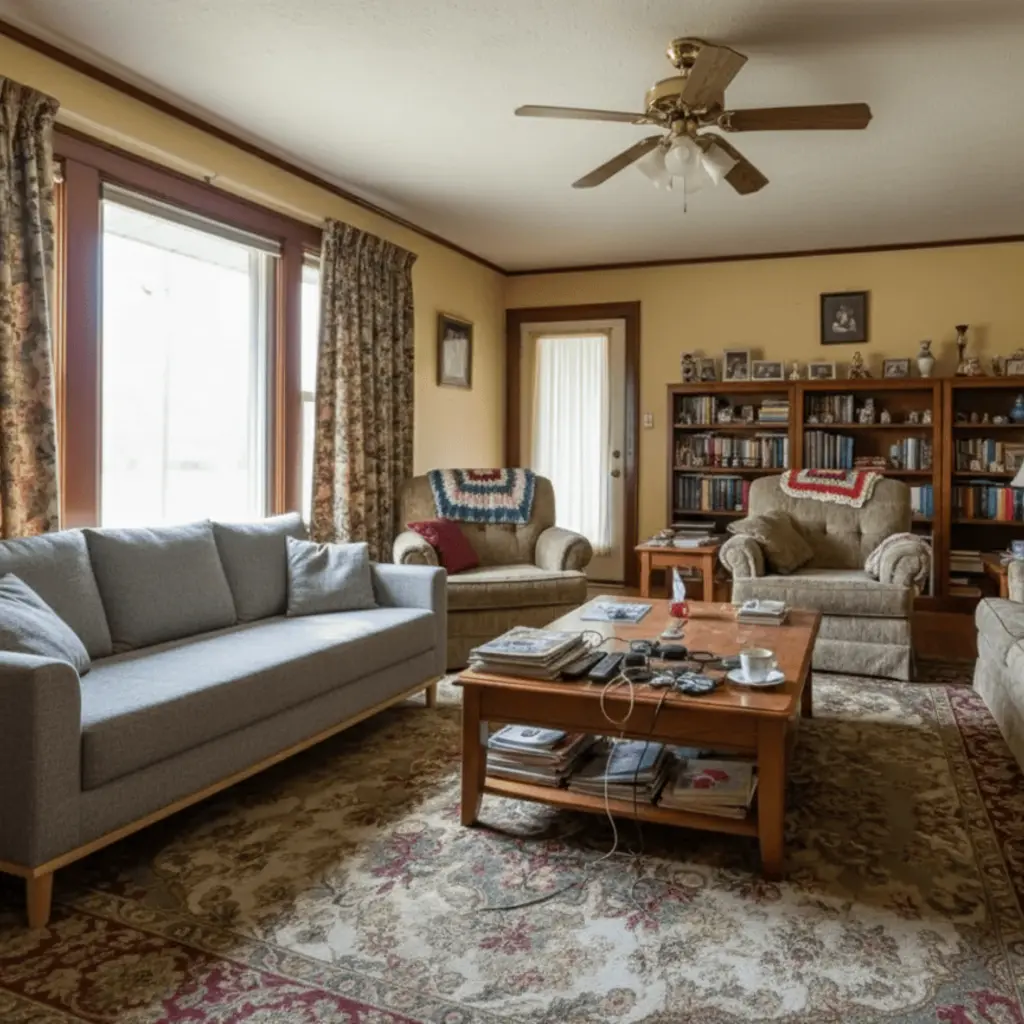
That piece
the actual product, not a lookalike
Right scale
sized to the room, sitting on the floor
30 seconds
cheaper than a return
Buying a large piece of furniture online is an act of faith. The product photo is shot in a studio against a neutral background, at a flattering angle, next to nothing you own. Measurements tell you it fits and nothing about whether it belongs. Placing a product reference into a photo of your own room closes the gap: its recognizable form and material at a visually plausible scale, on your floor, next to your things, under your light. It is a visual decision aid rather than proof of exact fit or fine product detail.
What this feature does
- Input
- A room photo plus a clean reference photo of one product.
- What changes
- Redraws the referenced product into the room at a visually plausible position, perspective, and scale.
- What stays
- The existing room, camera position, and surrounding objects.
- Use another feature when
- Use Add Furniture for a complete furnishing scheme, and fit calculators for exact dimensions.
How to judge a product-placement preview
- The product silhouette, main color, and material remain recognizable.
- Perspective and broad scale look plausible beside familiar room features.
- The product meets the floor or supporting surface without floating.
- Lighting and shadows agree with the room photograph.
- Fine product details are treated as a visual reference, not proof of an exact match.
Why scale is the whole problem
Furniture retail photography is designed to make pieces look good, and one of its reliable techniques is ambiguity about size. A sofa photographed in a large studio with an oversized rug and a high ceiling reads as elegant and proportionate. The same sofa in a small terraced living room can dominate the space entirely. Nothing about the photograph was dishonest; it simply gave you no reference for scale, which is the property that decides whether a piece works.
Dimensions in a specification are supposed to solve this, and they do not, because very few people can convert 218 by 94 centimetres into a mental image of their own room with a sofa in it. Marking the footprint out on the floor with tape is the traditional workaround and it is genuinely useful, but it shows you a footprint rather than a volume: it tells you nothing about height, bulk, or how much of the window the back of the piece will obscure.
Rendering the actual piece into a photograph of the actual room gives you the thing tape cannot: volume in perspective, next to the objects that provide scale reference. Whether it reads as generous or overwhelming becomes visible immediately, which is the judgement you were trying to make and could not.
Choosing a product photo that works
The best input is the standard retail product shot: the piece alone, well lit, against a plain white or neutral background, photographed from a slight angle rather than dead-on. That is close to ideal because the model needs to understand the object's form in three dimensions in order to draw it from the angle your room requires, and a three-quarter view carries far more of that information than a flat elevation.
Weaker inputs are lifestyle shots where the piece is partly obscured by cushions, plants, or a model sitting on it, since the model has to separate the product from its setting before it can place it. Extreme close-ups of fabric carry the material and not the form. Images at a strongly different angle from your room's viewpoint are harder, because more of the piece has to be inferred rather than observed.
It is worth knowing that this is a placement rather than a photographic composite. The piece is redrawn to sit correctly in your room's perspective and lighting, so it will not be pixel-identical to the product photo. Colour and material are carried across faithfully; the exact stitching pattern on a cushion may not be. For a buying decision that trade is entirely worthwhile, and it is what makes the result look like it belongs rather than like a sticker.
Where placement struggles
The room needs visible floor where the piece is going. A model placing a sofa needs to know where the floor plane sits and how far away the wall behind it is, and it reads both out of the photograph. A shot cropped tightly above floor level, or one where existing furniture occupies the entire target area, leaves it guessing, and guessed placement is where things start to float.
Existing furniture in the target spot is the most common practical obstacle. Placing a new sofa where the old sofa currently sits gives the model two sofas to reconcile. The reliable sequence is to clear the space first with Declutter or a targeted edit, then place the new piece into the cleared room. It costs an extra credit and saves several wasted attempts.
Very small objects and very large ones are both harder than mid-sized furniture. A vase on a shelf occupies too few pixels for its form to survive placement convincingly. A modular corner unit spanning two walls has to be reconstructed across a corner, which is a genuinely difficult geometric problem. Sofas, chairs, tables, beds, and rugs sit in the range where this works best, which happens to be the range where the buying decisions are hardest.
Looking right and fitting are different questions
A placement answers whether the piece belongs in the room. It does not answer whether the piece can get into the room. Those are two separate ways for a purchase to fail, and the render only ever speaks to the first. A sofa can look perfect against your wall and still be four centimetres too wide for the stairwell turn, and the image will give you no hint of it, because the model is drawing the piece in place rather than simulating its journey there.
The checks the render cannot make are the ones worth doing with a tape measure: the narrowest doorway on the route, the turn at the top of the stairs, the ceiling height where a mattress has to be tipped, and whether the lift is deep enough. Once the piece is in, clearance is the second physical question. A walkway wants room to pass without turning sideways, a dining chair needs space to push back from the table, and a sofa across the only radiator or the only double socket creates a problem the photograph will render quite beautifully. The sofa fit, furniture spacing, and rug size calculators on this page exist for exactly these numbers.
So run them in the order that fails cheaply. Measure first, which costs ten minutes and rules out the pieces that cannot physically work. Render second, to choose between the ones that can. Doing it the other way round means falling for something in a picture and finding out at delivery, and a returned sofa is the most expensive outcome available: collection fees, restocking, and several weeks without anywhere to sit.
AI placement vs retailer AR apps
Several large furniture retailers offer augmented reality in their apps: point your phone at the floor and a 3D model of the product appears in the camera view at its true dimensions. For pieces those retailers sell, that is the better tool for one specific question, which is size. The model is built from the real measurements and anchored to your real floor, so you can walk around it and see exactly how far it reaches into the room. A photo placement reads scale from the picture and gives you a plausible size, not a measured one.
AR has limits that matter for most purchases, though. It only works for products the retailer has built a 3D model of, which rules out the vintage piece, the small maker, and the sofa from a shop without an app. It needs you standing in the room with your phone, so it is no help for a room you are moving into, a client's home, or a partner in another city. And the result is a live camera view rather than a picture you can keep, compare, and send.
Placement from a photo covers those gaps. Any product photo from any shop works, the room can be one you photographed weeks ago, and the result is an image you can set beside a second candidate or forward to whoever shares the decision. Its weakness is the reverse of AR's strength, so use them in that order when both are available: AR or a tape measure to confirm the piece fits, a placement to decide whether it belongs.
Try it yourself. First 3 designs free with Google · No credit card
Place a product in a roomWhy place your own furniture works
Measurements are not the question
Knowing a sofa fits tells you nothing about whether it dominates the room or disappears into it. Seeing it does.
Avoid the return
Returning a large item is expensive, slow, and sometimes impossible. Ten minutes of checking is cheap by comparison.
Against your existing things
A piece has to work with the floor, the walls, and the furniture already in the room. A studio product shot shows it against none of them.
Compare two candidates
Place both products in the same room photo, one after the other in one studio conversation, which no amount of tab-switching between product pages achieves.
For retailers and designers
Showing a customer your product in their room is a considerably stronger proposition than showing them the catalogue shot again.
Your room stays your room
Walls, windows, and proportions come from your photo. Only the placed piece is added.
How it works
- 1
Photograph the room
Shoot the space where the piece would actually go, with the floor visible in front of it.
- 2
Add the product photo
The retailer's image is usually ideal: a clear shot of the piece, well lit, against a plain background.
- 3
Place and judge
Preview the piece at a visually plausible room scale in about 30 seconds. Try a second candidate and compare, then measure before buying.
Related tools
Go deeper
Frequently asked questions
Ready to try it on a real room?
Place a product in a room